Lap dance in Tel Aviv
Lap dance is the closest format there is: a set for one person seated on a chair, lasting a song or two. It needs a chair with no arms and two clear metres.



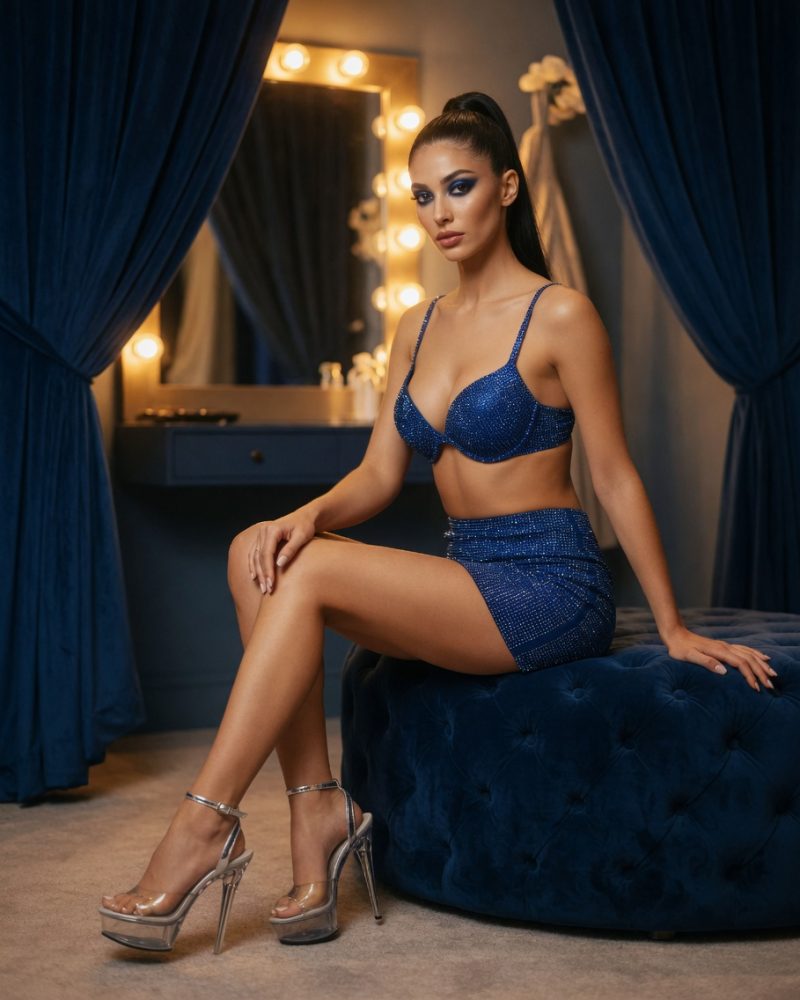
What lap dance actually is
Lap dance is the closest format there is: the dancer works with one person seated on a chair, at short range, for the length of a song or two. There is no character, no arc and no long build — there is presence, rhythm and eye contact.
It is the exact opposite of burlesque, which is made for a whole room from a distance. Those two are the styles we are asked for most, and often in the same evening: burlesque opens and brings the room together, lap dance is the moment for the groom or whoever is being celebrated.
The rule worth understanding before you book
Said openly, because it is the most important thing about this style.
The dancer sets the distance and what happens within it, not the person in the chair. She does not need our approval to stop, and she stops on her own if someone crosses the line. If that happens the set ends, the payment stays where it is, and that client does not get a second booking.
We write this upfront rather than quietly, because the people who understand it enjoy the show considerably more. The person in the chair sits, enjoys it and does not have to guess what is allowed — she leads, and that is part of the craft rather than a restriction imposed from outside. The same is set out in the FAQ.
Who it suits, and who it suits less
It suits a bachelor party, a small closed group where everyone knows each other, and any evening with one clear person being celebrated. Also a man's birthday, provided he knows in advance that there will be a show.
It suits less a mixed audience who did not know each other beforehand, a company event, and any evening with couples in the room. In all of those we will suggest burlesque or fashion erotica instead — not because the other is impossible but because it simply works better.
And if the person being celebrated knew nothing and did not choose this, hint in advance. A complete surprise in this style often ends with someone shrinking into the chair, and that wastes the evening for everyone.
The chair is the main tool
It sounds technical, and it is the detail that most affects the result.
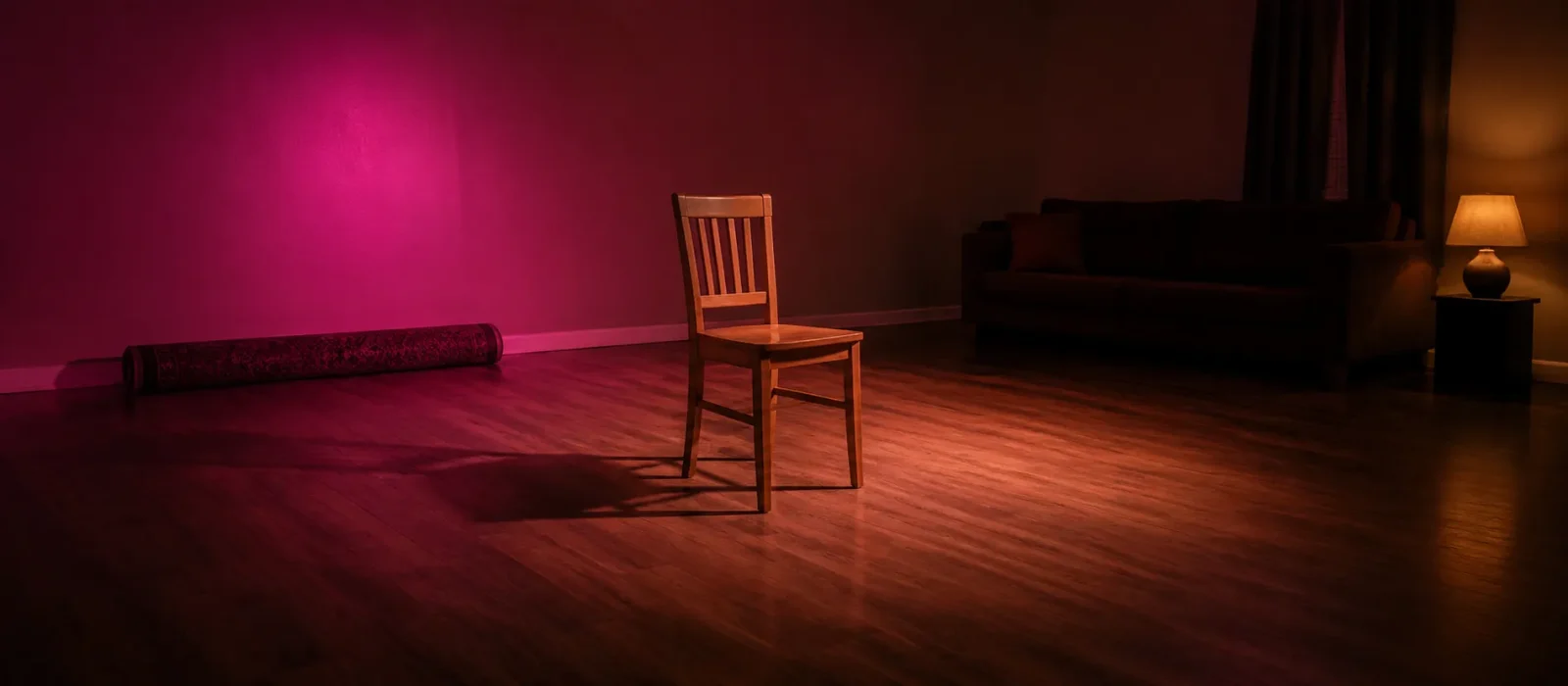
What is needed: an ordinary, stable chair, with no arms and no castors. An armchair does not work — it is low and soft and cancels half the movement. An office chair that swivels is a genuine hazard. A plain dining chair is ideal.
Where to put it: in the middle of a clear area, not against a wall and not in a corner. There has to be room to move around it. A square of about two metres by two is plenty, and that fits even a small living room in a Bauhaus flat in central Tel Aviv.
Where everyone else goes: anyone not in the chair should be behind or to the sides, not facing it. That sounds obvious and in practice people almost always need moving.
How long it runs
A single lap dance number is one to two songs, so three to six minutes. It is not meant to be longer than that — what makes it strong is precisely that it is short and focused.
Inside a solo booking of forty-five to sixty minutes there are usually one or two such numbers, with other styles filling the rest. Anyone who wants the entire booking to be lap dance generally discovers halfway through that it is less interesting than they expected, and we will say so in advance.
Music and light
Lap dance runs on a slow to medium tempo, not fast club music. If you have a speaker, set the volume so that laughter in the room is still audible — a wall of sound actually reduces the effect, because it erases the silence between moments.
On lighting: one side lamp beats the ceiling light. Complete darkness does not work — people need to see.
How it differs from the other styles
From burlesque — there you watch, here you are inside it. From pole — that needs a pole and acrobatics, this needs only a chair. From club sets and go-go — those are styles for a large room and a large group, and lap dance is the reverse: the smaller the group, the stronger it is.
So with twenty guests we will almost always suggest mixing it in rather than building the whole evening around it.
Who performs it with us
Not every dancer works in this format, and that is her choice rather than ours. The catalogue marks who has it in her repertoire, and you can go through the full lineup with each dancer's styles and choose. If you would rather not, just tell us who is being celebrated, how many of you there are and what time, and we will suggest.
Where people book it
Most often in Florentin, central Tel Aviv and Bat Yam — where the groups are younger and the evening starts late. But the format does not depend on the venue: it needs a chair and two metres, and that exists in any flat, hotel room or cabin.
The price is the same across the whole area and is set out on the prices page. Cash at the end of the show, no deposit.
What a show costs Lap dance
Pick the costume in advance
You pick the costume in the message and she brings it, at no extra charge. Want something not on the list? Ask, we can usually arrange it.
- Nurse
- Cowgirl
- Waitress
- Teacher
- Flight attendant
- Secretary
- Maid
- Cat
A dancer for any occasion
What people ask Lap dance
A close set for one person seated on a chair, lasting a song or two. No character and no arc — presence, rhythm and eye contact. It is the opposite of burlesque, which is performed to the whole room from a distance.
The dancer sets the distance and what happens within it. She stops on her own if someone crosses the line, without needing our approval, and the payment stays where it is. People who understand that beforehand enjoy the show more.
An ordinary stable chair with no arms and no castors. An armchair does not work because it is low and soft, and a swivelling office chair is a hazard. A plain dining chair is ideal.
One to two songs, so three to six minutes per number. What makes it strong is precisely that it is short. A solo booking usually contains one or two of them.
We will mix it in rather than building the whole evening around it. The smaller the group, the stronger this format is. For a large group we will add styles performed to the room.
Hint in advance without giving details. A complete surprise in this style often ends with someone shrinking into the chair, and that wastes the evening for everyone.
The price follows the format rather than the style: 800 shekels solo, 1,400 duo, 2,200 for the VIP format, including travel, costume and music. Cash at the end, no deposit.
We cover the whole metro
What else they do
A built performance with an entrance, a peak and an ending. The reveal is the punchline rather than the content.
High energy with tempo and a crowd. It suits big groups who want something to happen rather than to watch quietly.
An entrance in character before anyone works out what is happening. The strongest style for a surprise.
Belly dance and eastern movement. It plays well to a mixed room and to events with character.
A clean line, movement close to dance, nothing crude. The one style you can put in front of a mixed group.
Leather, latex and a harness. An aesthetic rather than a session: a character, a costume and an atmosphere.
Continuous dancing with no single dramatic peak. You can step in and out of watching it.
Salsa and bachata at high energy. Plenty of interaction with the room, not only the guest of honour.
A slow set from an experienced dancer. Less acrobatics, more control of the room and the tempo.
A fifties aesthetic: retro, playful and never crude. It suits events that want light rather than heavy.
A set from a dancer with a full figure, with no apology and no hiding. Confidence is half of it.
Pole work: strength, long lines and slow descents. It needs a pole or a high ceiling.
An outdoor set on a deck or beside a pool. Movement adapted to a surface that moves, daylight instead of dark.
Want a Lap dance?
Tell us the style and the time and we will say who is available.