Dancer vacancies
What the work actually is, how an evening runs, what we ask for and what we never ask for.
This page is written for dancers considering joining, not by a marketing department. There are no promises of unlimited income and no photographs of cars. There is what the work actually involves, how an evening runs from the first message to getting home, what we ask for, and above all what we never ask for.
We are a booking agency for shows. People book us to flats, hotel rooms and holiday cabins, and what we sell is a striptease performance with a beginning and an end. That is the entire service, and it is written in the same words on every page of this site.
What the work actually is
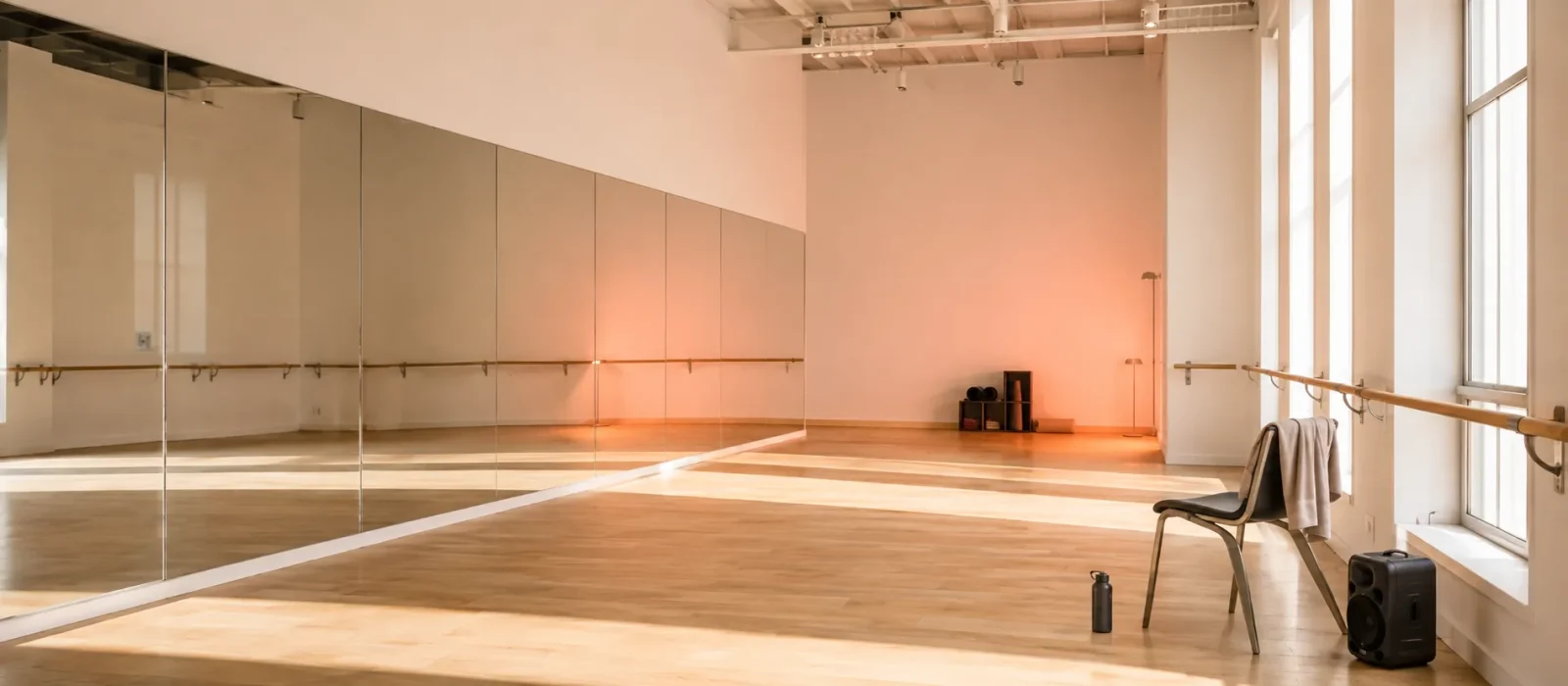
A built show of 45 to 90 minutes depending on format. You arrive at an address, change in a side room, perform and leave. From walking in to walking out is an hour to an hour and a half.
- Solo. 45 to 60 minutes, one dancer. The most common format.
- Duo. 60 to 75 minutes, two dancers working shared choreography.
- VIP. 90 minutes in three parts, three dancers. Mostly villas and cabins.
The audience is usually a bachelor party, a birthday or an evening among friends. The settings are private flats, hotel rooms and cabins. Most of the work sits between nine at night and two in the morning, and the busy periods are weekends and summer.
What we ask for
- Twenty-one or older, with photo ID. We check age before anything else, with no exceptions.
- The right to work in Israel. Citizenship, residency or a valid work visa. We cannot take anyone on a tourist visa.
- A show you can repeat. A professional dance background is not required, but a built routine is: an entrance, a middle and an ending, rather than improvising by mood.
- Reliability. Arriving on time, answering messages, saying in advance when something changes. It sounds minor and it is the single thing that decides whether anyone books you again.
- Willingness to appear under a stage name. Every dancer has a profile with a stage name, age, style and description. Full names appear nowhere.
Not required: previous experience in this field, a portfolio or a course. Some of the dancers here came from competitive dance, pole and theatre, and some started here.
What we never ask for
This is the section the page exists for.
We do not ask for escort work. Not as a booking, not as an extra, not “if you want to”. We do not provide that service and do not broker it, and a client who asks for it is refused by us before he ever reaches you.
We do not ask you to stay afterwards. The show ends, you take the money and you leave. No sitting with guests and no drinking with them.
We do not ask you to pay for anything. No registration fee, no charge for photographs, no deduction for advertising. An agency that asks you for money to get started is not an agency.
We do not ask for exclusivity. Working elsewhere as well is your business.

How an evening runs
- A message. You get the details: hour, area, format, guest count, occasion. If it does not suit you, you say no and it ends there.
- Travel. Booked and paid, both directions. Nobody travels by bus carrying a costume bag.
- Arrival. You arrive dressed normally and change in a side room. Door to show start is around seven minutes.
- The show. By format. The rules are given to the client in writing before the booking is confirmed: contact only when you invite it, photos only during the break and with permission, and the show ends when it ends.
- Payment. Cash, at the end, into your hands. Not to a third person and not afterwards.
- Home. A booked ride back.
Building a routine that works in a living room
The part that surprises dancers coming from a stage, so it is worth spelling out.
A living room is not a small stage, it is a different kind of space. The audience sits two metres away rather than twenty, there is no lighting to hide behind, no sound from a hall, and no distance that absorbs a mistake. What works on a far stage reads as too large here, and what looks small on a stage works perfectly.
- Movement in place rather than across space. Running the width of a room and long diagonals do not exist. The routine is built around a two metre square.
- Chair work. The chair is the main tool, not the pole. It is worth having a complete routine built around it, because every flat has a chair and very few have a pole.
- Floor work, carefully. Wood, rug or cold tile, and each behaves differently. Floor work exists but stays short.
- Eye contact instead of large expression. Up close an exaggerated face reads as theatrical. Half the work here happens in the eyes.
- A fixed structure. Entrance, two sections, ending. A room that senses a plan settles and watches. A room that senses improvisation starts talking among itself.
If you arrive without a routine ready, we go through it together before the first evening. It is not a course and not an audition, just a practical conversation about what works in a small room.
What goes in the bag
- The agreed costume, plus an alternative. Clients change their minds in the last message.
- Shoes you can stand in for an hour. An unknown floor is reason enough not to gamble on a new heel.
- Music in two places: on the phone and as an offline copy. Signal at a cabin in the Galilee is not a given.
- A charged portable speaker, even when you were told the place has a system.
- Charger, wipes, hair ties, and the small things that break at the wrong moment.
When a guest crosses a line
Rare, and when it happens there is a procedure rather than improvisation.
You stop. If it repeats, the show ends and the payment stays with you. You do not have to negotiate in the middle of a room, explain yourself to ten people, or get our approval to end an evening.
We stand behind that decision including when the client rings afterwards angry. A client who behaved that way once does not get a second booking. It sounds obvious, and it is exactly what separates places in this business.
How often, and what it pays
Frequency is yours. Some dancers work two evenings a week and some work six. There is no quota, no penalty for saying no, and no rota that obliges you.
Payment is per show, in cash, the same evening. The exact figure and how it is calculated per format is discussed in the first conversation, along with what the agency takes and what for. We do not print a marketing number here, because that kind of number always turns out to mean something else in practice.
What can be said with certainty: travel is not deducted from you, there are no deductions for costumes or advertising, and there is no situation where you work an evening and are not paid because “the client did not pay”. The money changes hands at the end of the show.
Who it does not suit
- Anyone looking for steady daily income. This is evening work, not a full-time job.
- Anyone uncomfortable with a close audience. In a living room the guests are two metres away, and there is no stage distance.
- Anyone expecting the work to open into something else. It does not.
- Anyone who struggles with late hours and travel. Some bookings are in the north or the south, and then the evening is long.
How to start
Send a message through the contact page and say it is about work. The first message only needs your age, the area you live in, whether you have a dance background and what kind, and how many evenings a week interest you.
After that we talk by phone or meet, go through the formats, the payment and everything on this page, and see whether it works for both sides. There is no audition in front of an audience and no unpaid trial evening.
If a profile does go up, it looks like any other profile in the gallery: stage name, style, costumes and a description you approve before it is published.
Questions about how the whole thing works from the client’s side are on the frequently asked questions and shows and services pages. Worth reading, since that is exactly what the client read before booking.
What people ask Dancer vacancies
No. You need a show you can repeat: an entrance, a middle and an ending. Some dancers here came from competitive dance and pole, and some started here.
Twenty-one, with photo ID. We check age before anything else, with no exceptions, and you also need the legal right to work in Israel.
No. No registration fee, no charge for photographs, no deduction for advertising. An agency that asks you for money to start is not an agency.
Cash at the end of the show, into your hands. Travel is booked and paid separately and is not deducted from you. The exact figure per format is discussed in the first conversation.
You stop. If it repeats, the show ends and the payment stays with you. You do not need our approval, and that client does not get a second booking.
Yes. There is no exclusivity and no quota. Frequency is yours, from one evening a week to six.
No. The profile carries a stage name, age, style and a description you approve before it goes up. Full names appear nowhere on the site.
We cover the whole metro
Worth reading
Send a message, she is on the way
Reply within minutes, fixed price in the message, cash at the end. No deposit, no forms.