Stripper for a company event in Tel Aviv
When it fits a company event and when it does not, who needs to know in advance, and how to close the payment side.
A company event is the booking that goes wrong most often, and it goes wrong the same way almost every time: a show arrives in a room holding people who did not choose to be there. A bachelor party is a group that gathered for exactly this. A company evening is sometimes half a department that turned up because an email said there was a team night.
So this page starts with when not to. Everything else follows: how to build the evening, which format fits the headcount, where to hold it, and how to settle the payment when an invoice is involved.
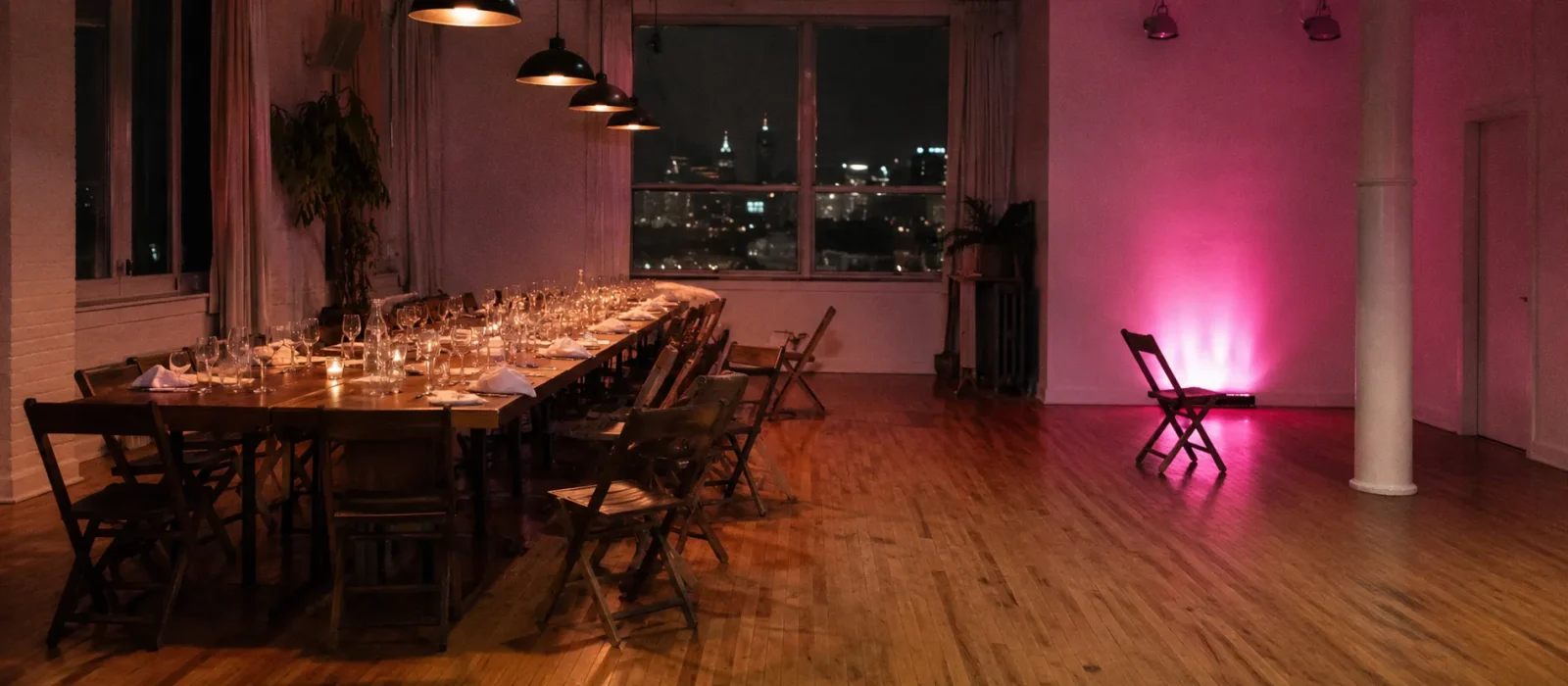
When it fits and when it does not
It fits when the group is closed, knows each other, and knows in advance what the evening contains. A sales team celebrating the end of a year, a group of colleagues who have worked together for a decade, a small team marking the end of a project.
It fits less well in three situations, and we say so even when saying so costs us the booking:
- When some of the guests do not know what is coming. An event where somebody discovers the show as the dancer walks in is the fastest route to an uncomfortable evening and a complaint the next morning.
- When there are reporting lines in the room. A direct manager and their reports in the same room changes what “everyone agreed” means. People who would rather not be there do not always say so out loud.
- When it is a formal company event. An evening with the leadership, with partners, or with clients is not the place. If there is a formal part, the show belongs to whatever follows it and to whoever stayed by choice.
We do not ask for consent forms and we do not vet anybody. That responsibility belongs to whoever books. What we do is raise it up front, because an organiser who thinks about it the day before saves themselves a real problem.
Building an evening that works
The simple rule: the show is not the event, it is part of it. An evening built only around it feels strange in a work group, and one dropped as a surprise in the middle of dinner feels worse.
- First part, formal or half formal. Dinner, a speech, the year in review. We are not in the picture here.
- The break. Anyone who does not want to stay leaves, and that has to be possible without anybody noticing. The easy way is to split the location: dinner at a restaurant, the rest at a flat or a suite.
- Second part, whoever stayed. The show goes here, and in a group that already chose to stay it plays completely differently.
What happens inside the show is on the shows and services page. The format is the same as any other evening; what changes is what you build around it.
Which format for how many people
- Up to ten. Solo at 800 ILS. Fits a small team and a single room.
- Ten to twenty-five. Duo at 1,400 ILS. The most common choice at company events, because two dancers hold a larger room and nobody ends up out of sight.
- Over twenty-five. VIP at 2,200 ILS, ninety minutes in three parts with breaks. In a large space it is the only format that genuinely works.
Worth remembering that a work group does not sit packed together the way a private party does. People stand in circles, talk, hold a glass. A format that is too small simply gets swallowed. Full pricing detail sits on the prices page.
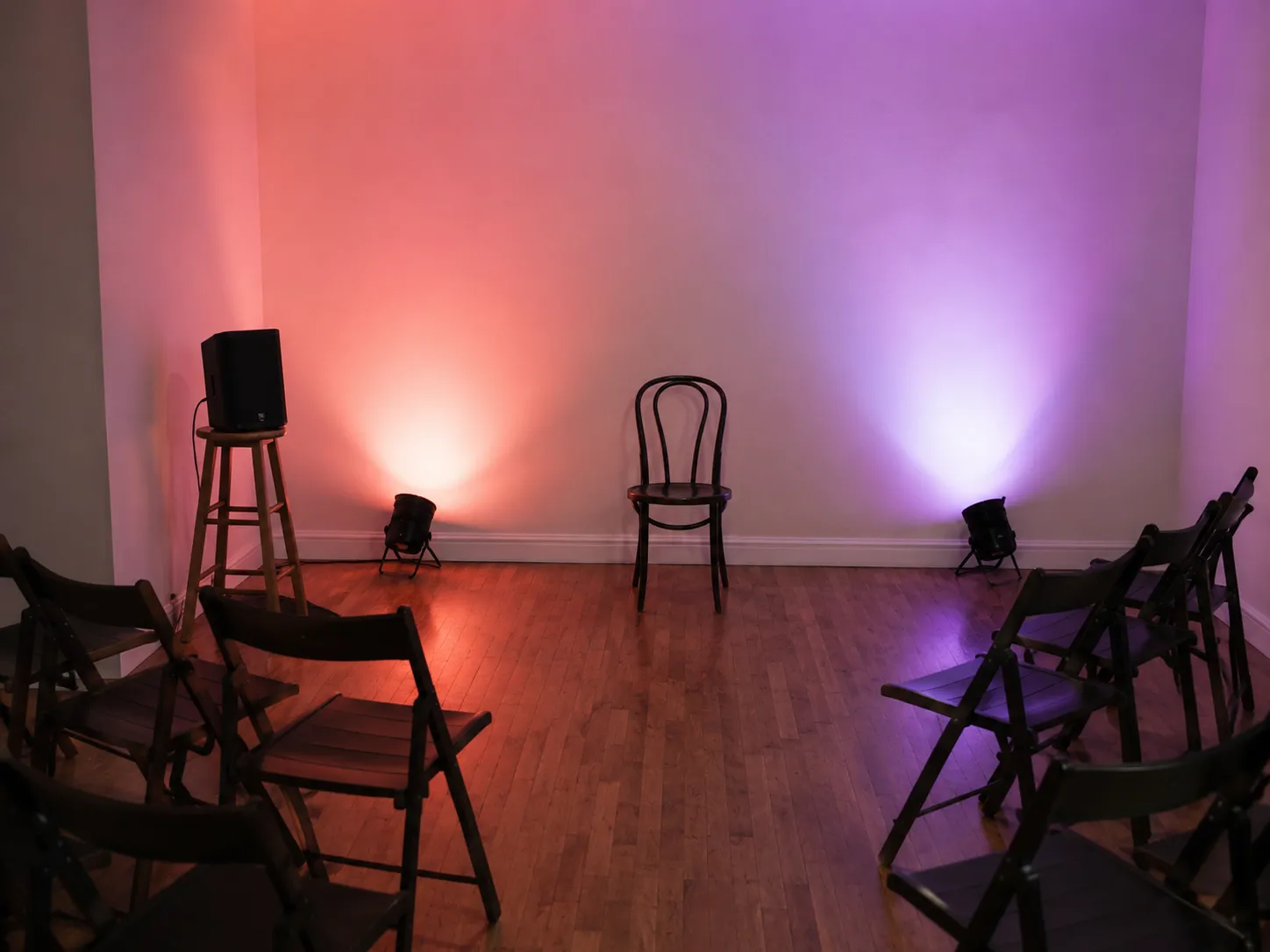
Where to hold it
A cabin or villa is the best option for a company evening: a large space, no neighbours, no closing time, and rooms to split between. Travel is shared too, which settles the question of who is driving.
A hotel suite works for a team visiting for a conference or an offsite. The booking goes to the room rather than the lobby, and it is worth checking in advance how many people the suite actually holds.
A private flat belonging to one of the team works for a small group and much less well for twenty.
An office is a special case. It is physically possible after hours, but think twice: an office is also a workplace on Monday morning, and how people feel walking back into that room is not always what you pictured. If you do it anyway, do it once everyone who is not part of the evening has left the building.
We cover the whole metro area with no surcharge, including Herzliya and the tech parks around it, and Florentin and Jaffa for anything closer to the city.
What to settle beforehand
- Who is coming and who knows. The first and most important question.
- An hour after the formal part. Not mid dinner, and not before somebody has had the chance to thank the team.
- A room with one clear wall and an armless chair. And a side lamp instead of overhead lighting.
- Who pays and how. An invoice gets arranged before the evening rather than after it.
- The filming rule. Far more sensitive at a work event than at a private party, and it gets said before rather than during.
Filming, and only once
At a company event this is the clause that causes most of the trouble. A clip filmed as a joke at two in the morning and forwarded around a department group chat the next day is a problem for whoever filmed it, whoever is in it, and the company. None of that is the evening’s fault.
Our rule is simple: no filming during the show. During the break you can ask, and most dancers will agree to a photo. Beyond that, it is worth the organiser saying one sentence before the show starts: what happens here does not travel. It sounds unnecessary right up until the first time nobody says it.
Payment and invoicing
The default across all our bookings is cash at the end of the show with no deposit. At a company event that sometimes does not sit well with an accounts department, so: if you need an invoice, say so in the first message and it gets arranged before the evening.
What does not work is leaving it to the end and discovering at two in the morning that somebody is covering it personally and chasing reimbursement on Monday. Agree in advance who is physically producing the money, because splitting a bill between twenty colleagues at the end of a work night is nobody’s good moment.

What is allowed and what is not
- Touching only when the dancer invites it. In a work group it is worth saying out loud beforehand, because this is exactly where somebody is most likely to confuse atmosphere with invitation.
- No guest of honour who did not agree. If somebody is put on the chair, they have to want to be there. An employee being pushed forward by the whole department is not in a position to refuse freely.
- The show ends when it ends. There is no afterwards and no arranging something on the side. We are not an escort service and do not broker one, and at a company event we say so up front on purpose.
- One person too drunk ruins it for everyone. At a work event it also stays in the room’s memory long afterwards.
Three organiser mistakes
- Making it a general surprise. Surprise works at a friend’s birthday. At a work event it produces people who stayed in the room because they could not work out how to leave.
- Booking it into a venue or restaurant. Most places have a policy against it, and where they do not, there are staff and other customers. A flat, a suite or a villa solves this.
- Planning it as the peak of the evening. It works best as the continuation, once the formal part has closed and whoever wanted to leave has left.
Which style suits a work evening
Style matters more in a work group than at a private party, because the room also holds people who came for the team rather than for the show.
Burlesque is the safest choice: built on costume, timing and tension, and comfortable to watch even for someone who did not come for it. Fashion is similar in character and reads more expensive, which suits an end-of-year evening. Club style fits a younger group already dancing, and yacht is exactly what it sounds like: a format built for open space and an evening that starts early.
What suits a work evening least is anything built on sustained one-to-one interaction. Every profile states what that dancer actually performs, so the choice can be made in advance rather than left to chance.
What to tell the team beforehand
The part organisers avoid most, and the one that decides whether the evening lands well. No formal notice is needed and no detail is required. One sentence in the invitation is enough to let everyone decide for themselves.
Wording that works: dinner starts at eight, and whoever wants to carries on afterwards to an informal part at a flat. That spoils nothing, and it gives anyone who is not interested a dignified way to leave after dinner without explaining themselves to anybody.
Two things not to do. Do not write that staying to the end is mandatory, not even as a joke, because that is exactly what turns a choice into an obligation. And do not tell part of the team and not the rest, because then the split runs along who is close to the organiser, and that stays in the room’s memory long after the evening.
An evening split across two places
Splitting dinner from the continuation is the best answer for a company event, but it needs a little planning that nobody does the first time.
- Distance. Ten minutes between the two places is the limit. Beyond that half the group evaporates on the way.
- Transport. If people drank at dinner, somebody has to arrange taxis in advance. A group hunting for rides on the street at midnight arrives in dribs and drabs and the show starts late.
- Keys. Who arrives first at the flat and opens it. Sounds trivial until everyone is standing outside.
- The dancer’s hour. We agree a time, and if the group is running late it helps to message straight away. Fifteen minutes is nothing; an hour depends on what else is booked that night.
The simplest approach: set the show for half an hour after the group is due to reach the flat, not for the hour they leave the restaurant.
How to book
One message: date, hour, address, headcount, and whether an invoice is needed. We answer within minutes with who is free, suggest a format and a costume suited to who is in the room, and give a final price in writing.
If you are unsure whether it suits your event at all, describe the group. We have said no more than once and we will say it again rather than sell you an evening that ends in a problem. More answers are on the frequently asked questions page, the first message goes through contact, and the gallery can be shown to the team in advance, since every profile states what that dancer performs.
What it costs to book a stripper
Pick the costume in advance
You pick the costume in the message and she brings it, at no extra charge. Want something not on the list? Ask, we can usually arrange it.
- Nurse
- Cowgirl
- Waitress
- Teacher
- Flight attendant
- Secretary
- Maid
- Cat
A dancer for any occasion
What people ask Stripper for a company event in Tel Aviv
When some guests do not know what the evening contains, when there are direct reporting lines in the room, and when the event is formal or includes partners and clients. In all three cases split the evening instead.
800 shekels solo, 1,400 duo, 2,200 VIP, including travel inside the metro area. A company event adds nothing to the price. If you need an invoice, it gets arranged before the evening.
A duo. Work groups stand in circles rather than sitting packed together, so a solo show gets swallowed by a large room.
Physically yes, after hours and once everyone not part of the evening has left. Think twice though: people walk back into that same room on Monday morning.
No filming during the show. During the break you can ask and most dancers agree to a photo. At a work event the organiser should say the rule out loud before it starts.
The default is cash at the end with no deposit. If an invoice or a formal payment is required, say so in the first message and it gets set up in advance.
That is exactly why we recommend splitting the evening into a formal part and a continuation. Anyone who wants to leave does so between the two without being noticed, and the show happens in front of a group that chose to stay.
We cover the whole metro
Worth reading
Send a message, she is on the way
Reply within minutes, fixed price in the message, cash at the end. No deposit, no forms.